Medical Super App (en)
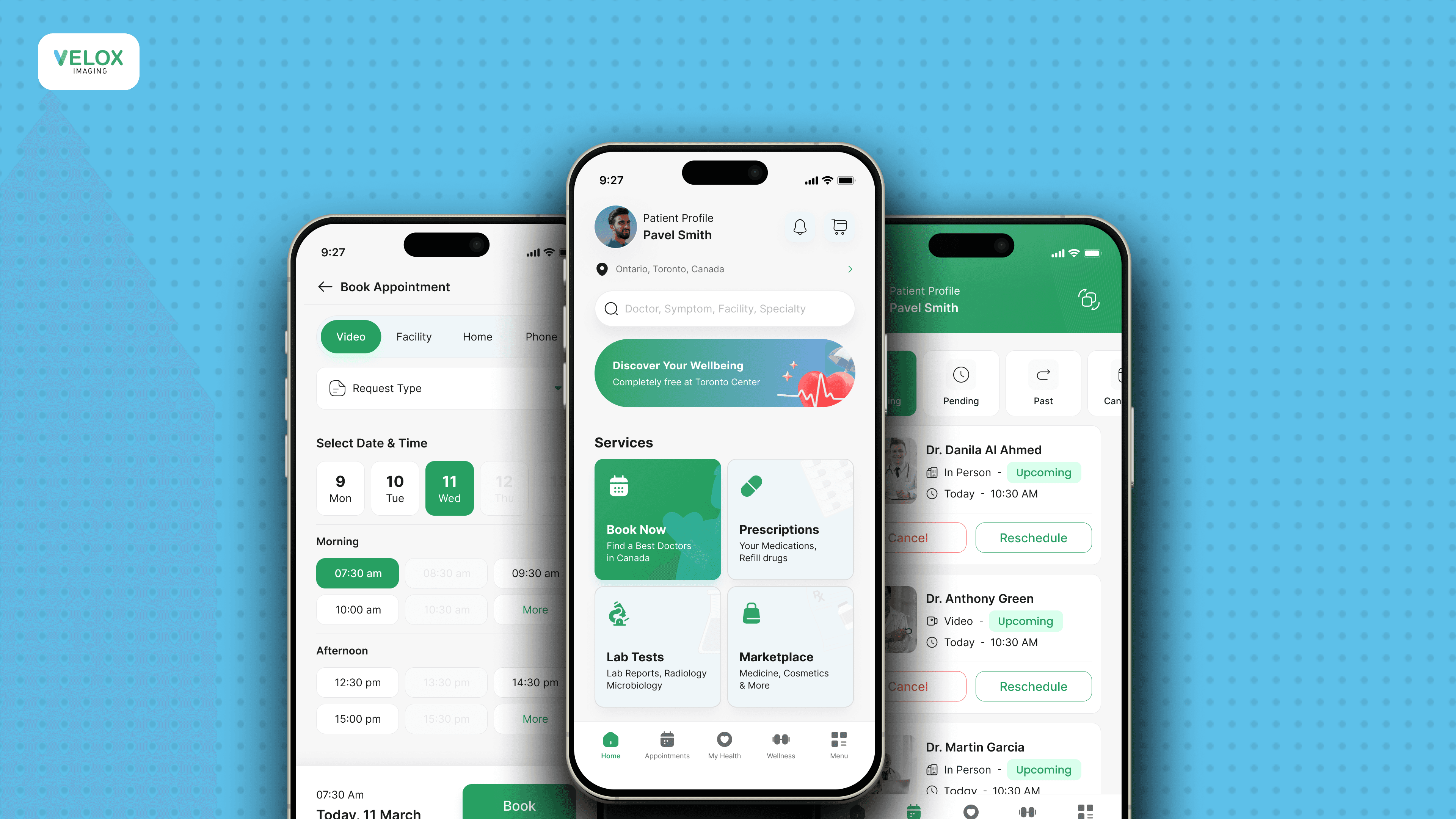
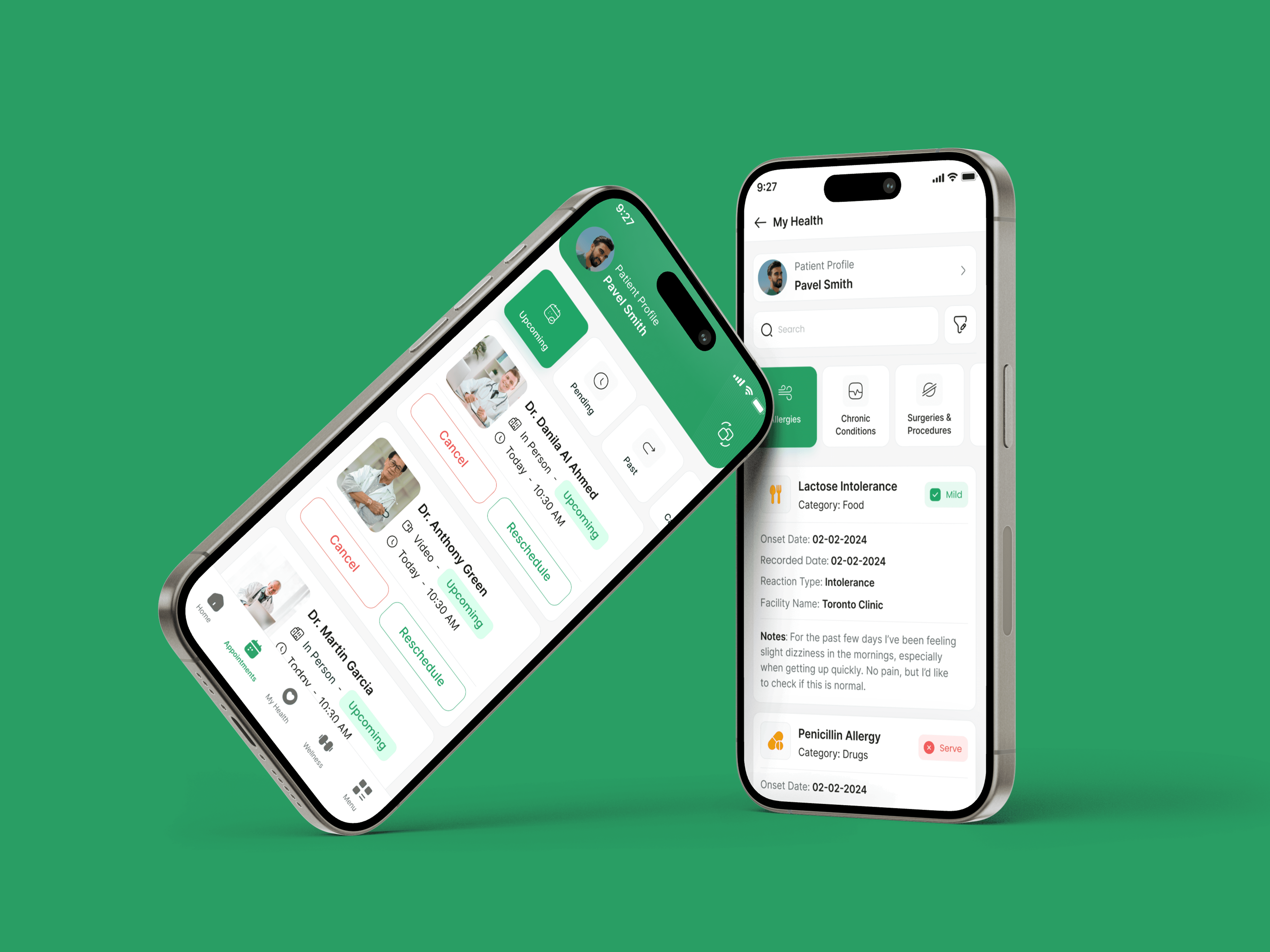
A mobile app for scheduling appointments at a clinic, tracking your health, and managing electronic medical records across different healthcare providers.
00
About project
Patients still find it frustrating to book an appointment with a doctor: endless phone calls, long queues, inconvenient websites, and a lack of clear information. They need a simple and intuitive tool that allows them to quickly choose a specialist, see available time slots, and manage all their visits in one place. In addition, patients want to track their health, store medical images, test results, and prescriptions all within a single app. Without this, accessing medical care becomes more complicated than it should be.
User Research
I conducted qualitative research with potential clinic patients, including:
- in-depth interviews with users of different age groups,
- analysis of existing medical booking solutions,
- identification of pain points, expectations, and trust barriers.
Key insights:
- users want to see real-time doctor availability, not “leave a request” forms;
- confirmation and reliability of bookings are critical;
- medical data must be easily accessible in one place;
- the interface must remain simple and intuitive, especially for less tech-savvy users.
Based on the research, I created:
- Jobs-To-Be-Done frameworks,
- user journey maps (CJM) covering booking, visiting, and repeat usage scenarios.
Stakeholder Collaboration
The project started with a series of stakeholder meetings involving clinic representatives, the product manager, engineering team, and business stakeholders.
The goals of this phase were:
- aligning on the product vision,
- understanding business constraints and success metrics,
- identifying key risks and assumptions.
As a result, we defined:
- a shared product vision,
- core success metrics (booking conversion, time-to-book, retention),
- a list of hypotheses that needed validation through research and design.
Hypothesis-Driven Design & Validation
As a product designer, I focused not only on screens but on hypotheses and outcomes.
Examples of key hypotheses:
- displaying real-time available slots will reduce booking drop-off;
- consolidating all visits and documents in one place will increase retention;
- reducing the booking flow to 3–4 steps will improve first-time conversion.
To validate these hypotheses, I:
- designed alternative user flows and interaction patterns,
- ran A/B tests on critical screens (doctor selection, booking flow, confirmation),
- tested clickable prototypes with real users.
Insights from testing directly informed final UX decisions.

UX Design & User Scenarios
I designed:
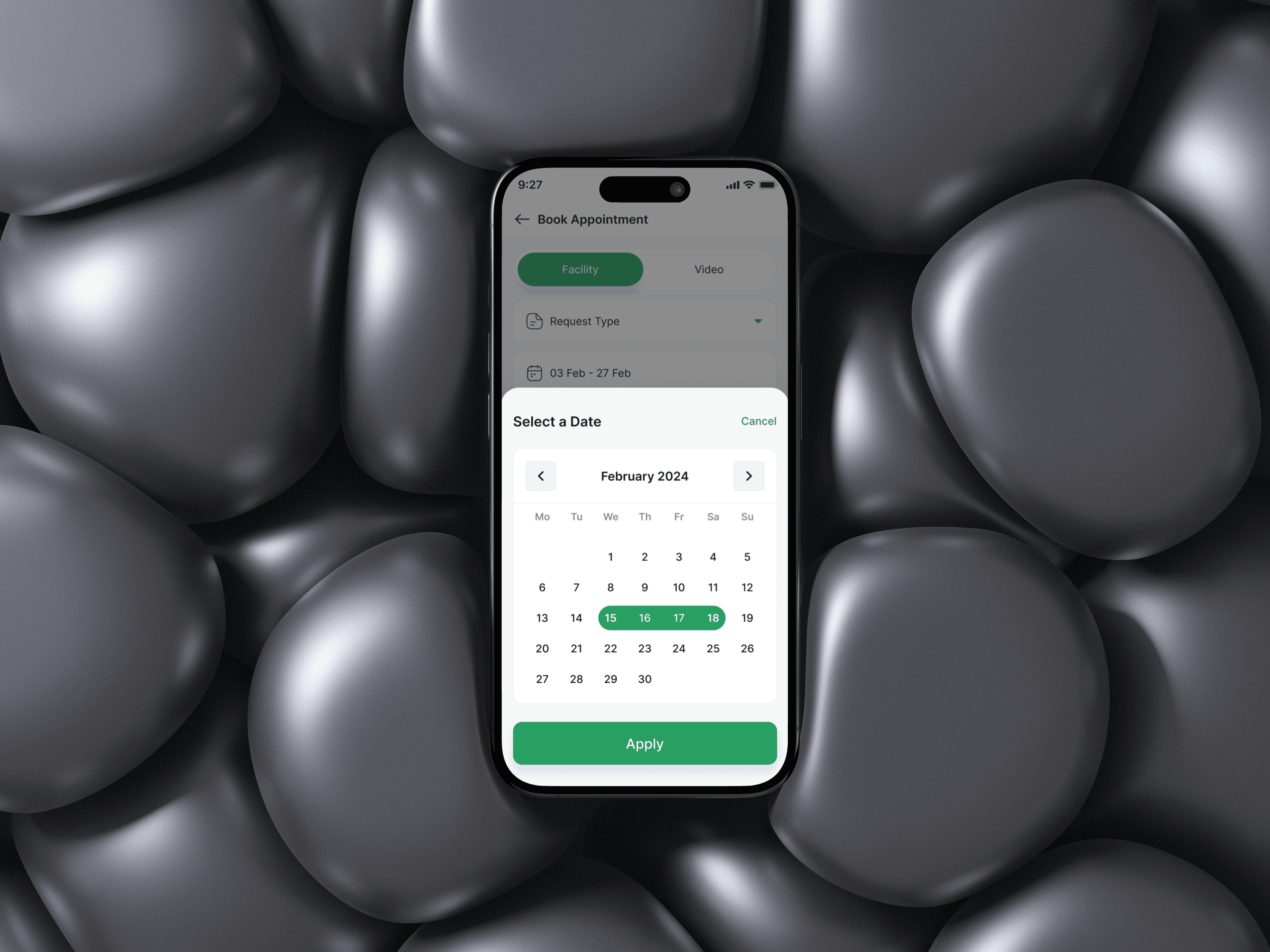
- core user flows (booking, rescheduling, cancellation, reminders),
- detailed user stories for patients and clinics,
- the information architecture of the app,
- edge cases such as appointment changes, cancellations, and multi-clinic usage.
Special focus areas:
- minimizing cognitive load,
- clear and human-centered language,
- reducing user anxiety around medical appointments.
Design System
To support scalability and efficient development, I built a design system:
- typography and color system with accessibility in mind,
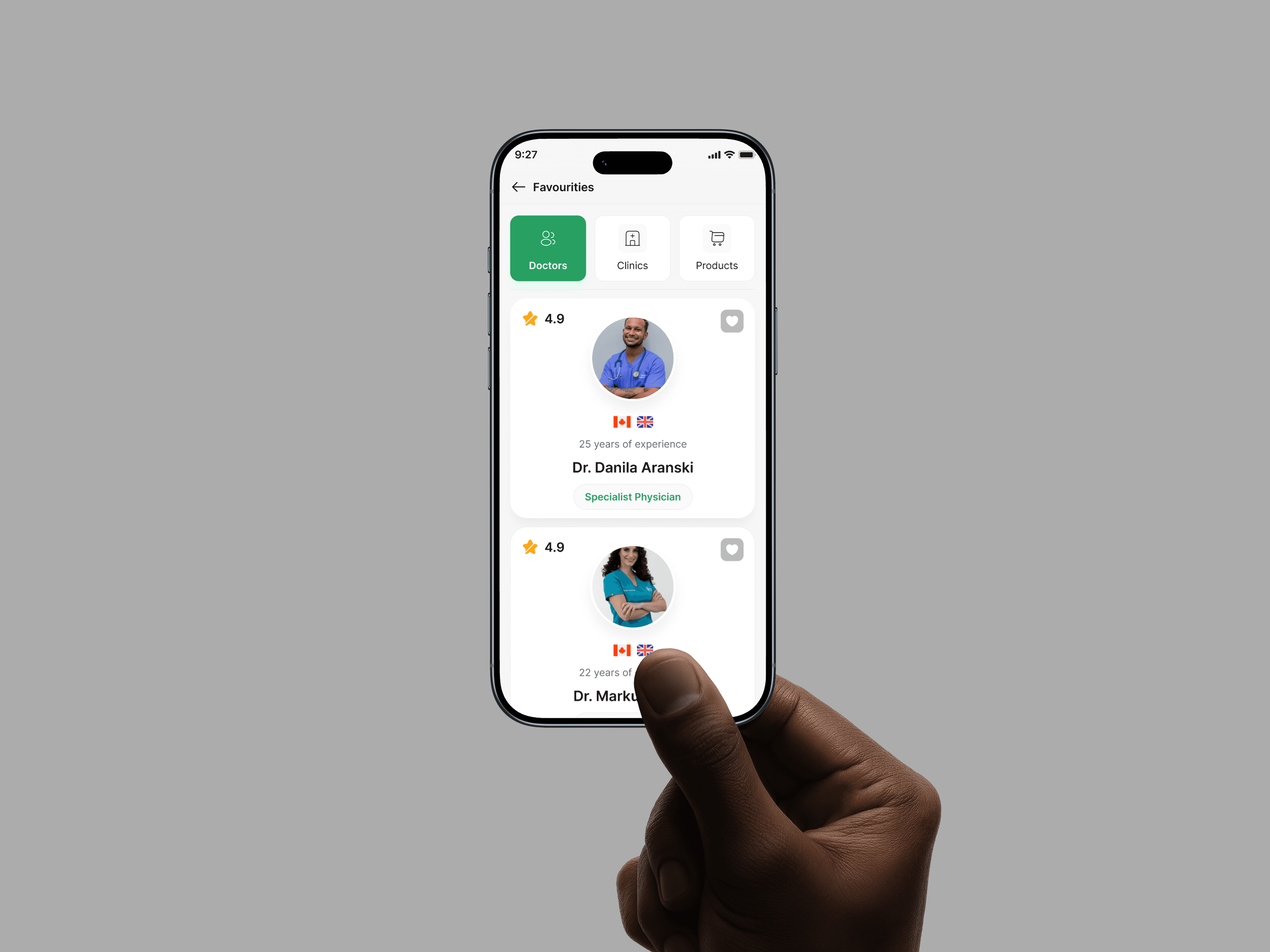
- reusable components (doctor cards, time slots, appointment statuses),
- error states and empty states,
- clear component usage guidelines.
This system helped:
- speed up design and development,
- ensure UI consistency,
- scale the product across multiple clinics and new features.
Outcome
The result was a product that:
- removes friction and stress from booking medical appointments,
- centralizes health data in one secure and accessible place,
- creates a transparent and trustworthy experience between patients and clinics.
This project reflects my approach to product design: making decisions based on research, validated hypotheses, and testing - not assumptions. I acted as a bridge between users, business, and engineering, designing not just interfaces, but a cohesive and scalable product experience.
.message
This case study highlights the core process and outcomes.
I’ll be glad to dive deeper into the project during an intro call and talk through decisions, challenges, and learnings in more detail.
see also